Flood Damage & Storm Recovery in Fresno, CA
Flood damage can spread quickly, and storms can leave behind standing water, moisture, and hidden damage. Water Damage Restoration Fresno provides fast flood damage and storm recovery for homes and businesses across Fresno, CA. Our team responds quickly with professional extraction and drying equipment to help limit further damage.
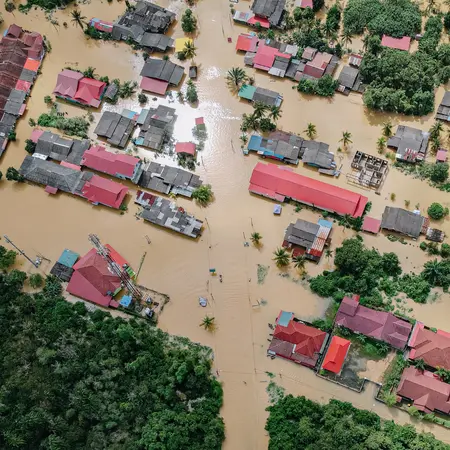
When storm water pushes past a doorway, foundation crack, or window well, cleanup needs to start quickly. Flood damage and storm recovery covers the extraction, drying, and safety checks that follow storm-related water intrusion in Fresno homes and businesses. Central Valley properties can take on significant runoff during heavy winter storms, and low-lying yards or aging drainage systems don't always keep water where it belongs. If you're searching for storm water removal near me after a storm event, our team is available 24/7 to help you sort out next steps.
Understanding Flood Damage & Storm Recovery in Fresno
Storm-related flooding doesn't behave the same way in every property. A fast-rising flow through a low door threshold acts differently than water seeping slowly through a foundation crack over hours. Storm recovery restoration services need to account for entry point, speed, and how far the water traveled before anyone noticed.
Flash Flood Cleanup After Heavy Rain
Sudden storm runoff moves fast and often carries debris, mud, and yard contaminants into a structure. The flash flood cleanup process starts with extracting standing water quickly, since fast-moving water tends to spread further into walls, flooring, and belongings than a slow leak would.
Debris and contamination make this work different from routine leak cleanup. Sharp debris, slippery floors, and possible electrical hazards mean caution matters before anyone starts removing water on their own.
Basement & Lower-Level Flooding After Storms
Not every Fresno property has a basement, but garages, crawl spaces, and other below-grade areas can collect storm runoff in the same way. Basement flooding after storm events tends to pool rather than drain, since these spaces sit below the surrounding grade.
Standing water left in place for even a day or two raises the risk of material damage and secondary moisture problems. That's why prompt pump-out and extraction matter more than people often expect.
What to Expect During Flood Cleanup and Storm Recovery
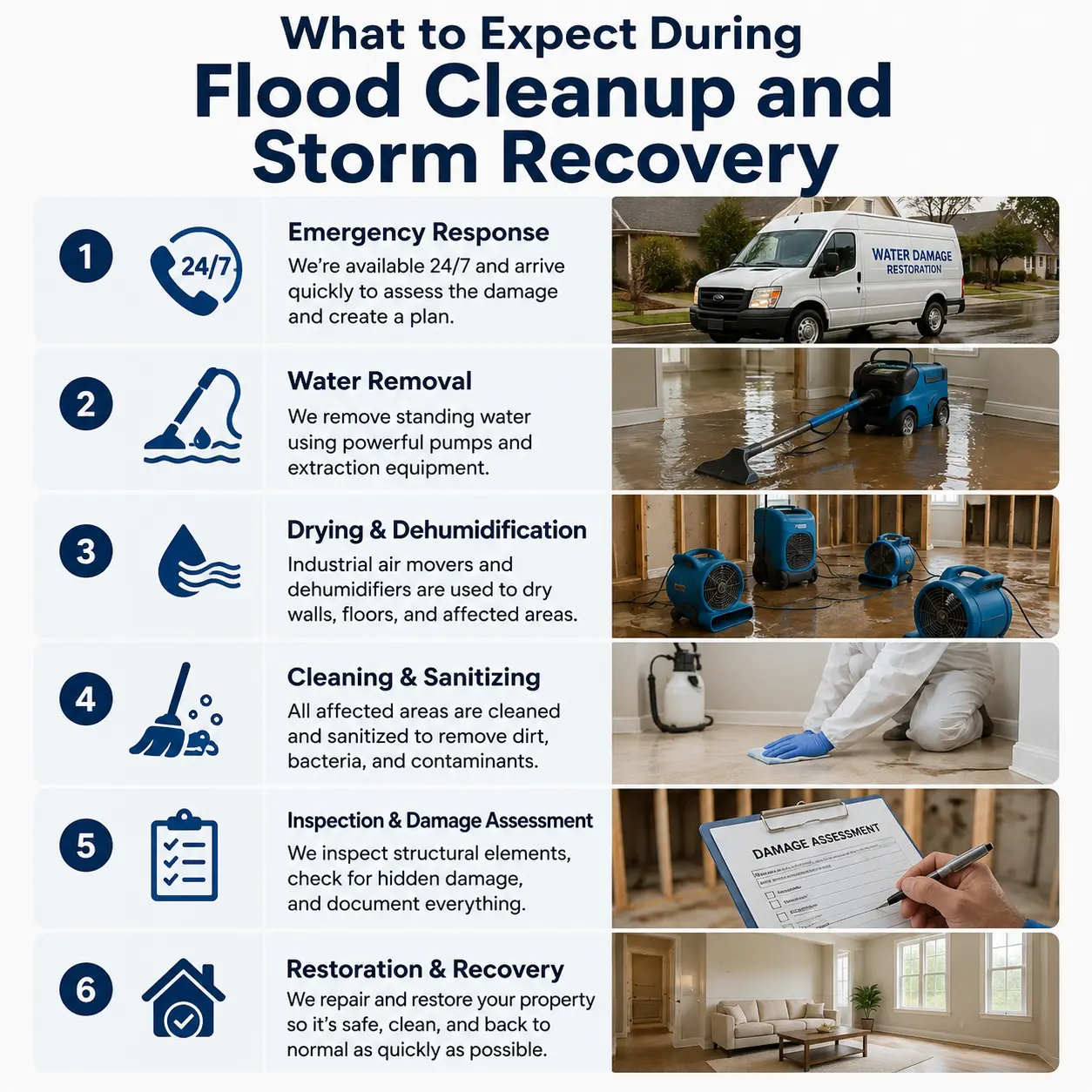
Emergency flood extraction typically starts with removing standing water using submersible pumps or truck-mounted extractors, depending on how much water is present and how accessible it is. Once bulk water is gone, drying work begins — air movers and dehumidifiers get positioned to pull moisture out of walls, flooring, and framing over the following days as part of a broader specialized drying and content restoration effort.
So what does flood cleanup include beyond extraction and drying? A basic flood cleanup checklist also involves checking for hidden moisture with moisture meters or thermal imaging cameras, since water can travel into wall cavities or under flooring where it isn't visible. Structural drying gets tracked with drying logs to confirm materials have actually reached a safe moisture level. Scope always depends on how much water entered and how long materials stayed wet before work began. On projects across the Central Valley, we've seen storm water sit unnoticed in a garage or laundry room for days simply because the homeowner didn't realize how far it had spread under cabinetry — a reminder that a visual check alone isn't always enough.
Flood Damage vs. Water Damage: Why the Difference Matters
Flood damage vs water damage isn't just a wording difference — it changes the cleanup approach. A clean water leak from a supply line is treated differently than storm water that traveled across yards, streets, or agricultural land before entering a structure. Storm and floodwater is commonly classified as Category 3 water under the IICRC S500 standard, meaning it's treated as contaminated rather than clean.
That classification affects which materials can be dried in place and which need to be removed. Porous materials like carpet padding or drywall that stayed wet with Category 3 water often can't be saved, and antimicrobial treatments may be applied to remaining structural materials as a precaution. Left unaddressed, contaminated moisture also raises the odds of needing mold remediation and testing down the line, which is worth factoring into cleanup decisions early rather than later.
Get Help With Flood Damage & Storm Recovery in Fresno
Storm water doesn't wait for a convenient time, and neither should cleanup once it's safe to act. Our team at Water Damage Restoration Fresno provides 24/7 emergency response for flood damage and storm recovery across Fresno and nearby Central Valley communities, alongside related services like emergency water damage restoration for non-storm water intrusion.
If storm water has entered your home or business, call +1-855-636-7880 for a practical assessment of what's involved and what comes next.
Frequently Asked Questions (FAQs)
Is all storm water considered contaminated?
Not automatically, but storm water that has crossed yards, streets, or agricultural areas is generally treated as Category 3 under industry guidelines, since it may carry bacteria, chemicals, or debris. That assumption drives more cautious handling than a typical clean leak, such as one from a burst pipe or slab leak.
How long does flood damage restoration take?
There's no fixed timeline — it depends on how much water entered, how long materials stayed wet, and whether contamination is present. A professional assessment after extraction gives a clearer picture of drying time and whether any materials need removal.
What should I do first if storm water enters my property?
If it's safe to do so, stop additional water from entering and avoid contact with standing water that may be contaminated. Avoid electrical panels or outlets near standing water, and call for a professional assessment rather than starting cleanup without knowing the water's source.